
What Pulaski County Deed Records Document
The Clerk of Superior Court is the recorder for land instruments in the county. Each filing type carries its own legal effect. Identify the instrument before reading an index row as a transfer.
| Deed Type | What It Does | Common Use |
|---|---|---|
| Warranty deed | Conveys an interest with stated warranties | Ordinary sale |
| Quitclaim deed | Conveys whatever interest the grantor has | Resolving an interest |
| Deed from estate | Records a transfer through estate authority | Estate administration |
| Security deed | Secures debt against real property | Financing |
| Tax sale deed | Reflects a statutory sale process | Tax enforcement |
Deeds sit beside liens, assignments, releases, easements, plats, and court orders in the index. Any of these can change debt, access, or land use without moving ownership at all. Type drives meaning.
Navigate Pulaski County's Grantor-Grantee Index
The GSCCCA Real Estate Index covers Pulaski County filings from January 1, 1990 through August 4, 2026. That span is the online window only. Deed records in the county reach back far earlier on paper and microfilm.
- Search the assessor owner as grantee and find the newest relevant transfer.
- Record both parties, instrument type, dates, and book/page.
- Search that grantor as grantee to locate the earlier acquisition.
- Repeat while matching acreage, land lot, district, subdivision, lot, block, and cross-references.
- Grantor
- The party transferring or encumbering an interest.
- Grantee
- The party receiving an interest or benefit.
- Chain of title
- The linked sequence of instruments affecting the same land.
- Book and page
- The clerk citation used to retrieve a filing.
Set the Pulaski County Deed Search Controls
The search form offers a name field of up to 70 characters plus party type, instrument type, county, neighboring counties, date range, result count, and display style. Enter individuals last name first. Short two-character names need tighter controls: narrow the county and instrument type and limit the date range to one year.
| Control | Useful setting | Reason |
|---|---|---|
| Party Type | Grantor and Grantee separately | Shows both directions |
| Instrument | Deed, release, lien, easement, estate | Separates legal acts |
| Date | mm/dd/yyyy range | Limits common-name noise |
| County | Pulaski first | Avoids regional false matches |
A submission can hit an account wall. Write down your search terms anyway, since the index data itself still came back.
The official GSCCCA deed-index form displays the statewide search surface that handles Pulaski County deed records.
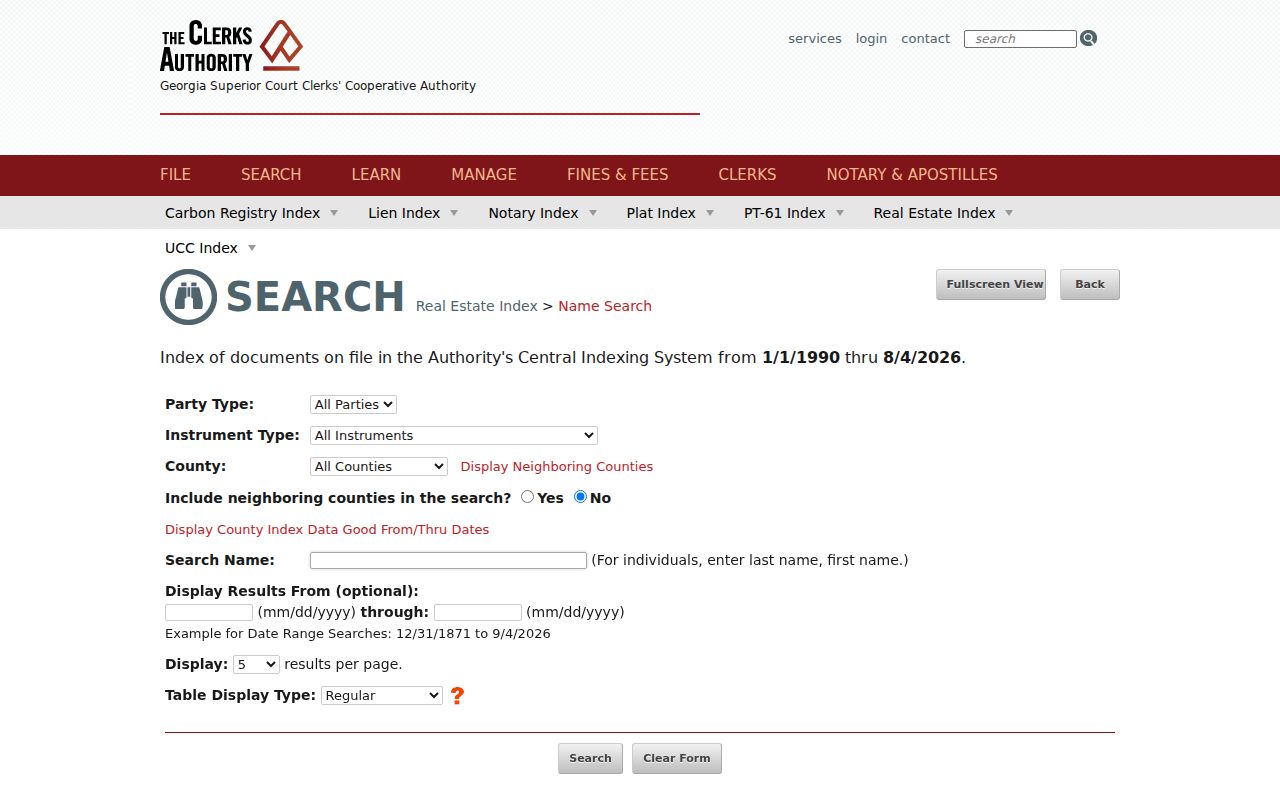
Its party, instrument, county, date, and display filters reward a narrow, repeatable query. One broad owner-name search tends to bury the transfer you need.
Read Each Pulaski Instrument in Context
Instrument type gives a deed its meaning. A warranty deed may convey title, while a security deed only secures debt. An assignment moves an interest; a release discharges one. Easements and rights-of-way change use or access. Court orders and estate papers can even flip the expected party direction. For every instrument you open in Pulaski County deed records, capture the county, type, grantor, grantee, execution date, recording date, book, page, instrument number, legal description, PT-61 clue, cross-reference, and image count. The signed date and the filed date answer different questions, so record both.
Note: Rely on the latest recorded transfer tied to the parcel, not simply the newest signature on the page.
Reconcile Pulaski County Land Descriptions
Georgia indexing standards ask for land lot, district, section or GMD, subdivision, unit, lot, block. Cross-references apply where they apply. Match those terms against the assessor's acreage and road clues. An older deed may predate the parcel number now on the tax roll. Shifted acreage can point to a split. It can also mark a combination, a boundary agreement, or an older indexing habit. The GSCCCA Plat Index adds land-lot and district controls for Pulaski parcels. A plat shows the land. It settles no title question alone.
Use PT-61 as a Pulaski Transfer Cross-Check
Georgia's PT-61 transfer-tax data is filed before many deeds are recorded. It can carry address, map, and sales-price clues. Use it to find or test a transfer. Then go back to the recorded deed itself. It substitutes for neither the instrument nor a full chain of title. The current GSCCCA indexing standards took effect July 8, 2026. Newer field labels may differ from older Pulaski County deed records even though the land history stays linked.
Reach Pulaski Deeds Before 1990
Deed records before 1990 live at the courthouse, in archives, or on microfilm. A catalog title lists deeds and mortgages. It covers 1807 to 1920, and its index runs through 1939. No direct catalog record exists online. Ask the repository to confirm the film or volume. The Georgia Archives explains county microfilm. It also covers the Virtual Vault and FamilySearch routes into Pulaski County history. A blank result can mean several things. It may point to a missing web index, a wrong name, or a spelling variant rather than a missing deed.
Note: Record every gap in years and sources when rebuilding a historical Pulaski County chain.
Watch New Pulaski County Filing Activity
The free Filing Activity Notification System can alert a registered owner of record when a property shows up in new deed, lien, UCC, or plat filings. An alert is only a signal. FANS blocks nothing and proves no fraud. Check every notice against the Clerk's index entry and the document image before drawing conclusions.
The official FANS enrollment page presents the alert route available once your Pulaski County deed search is done.
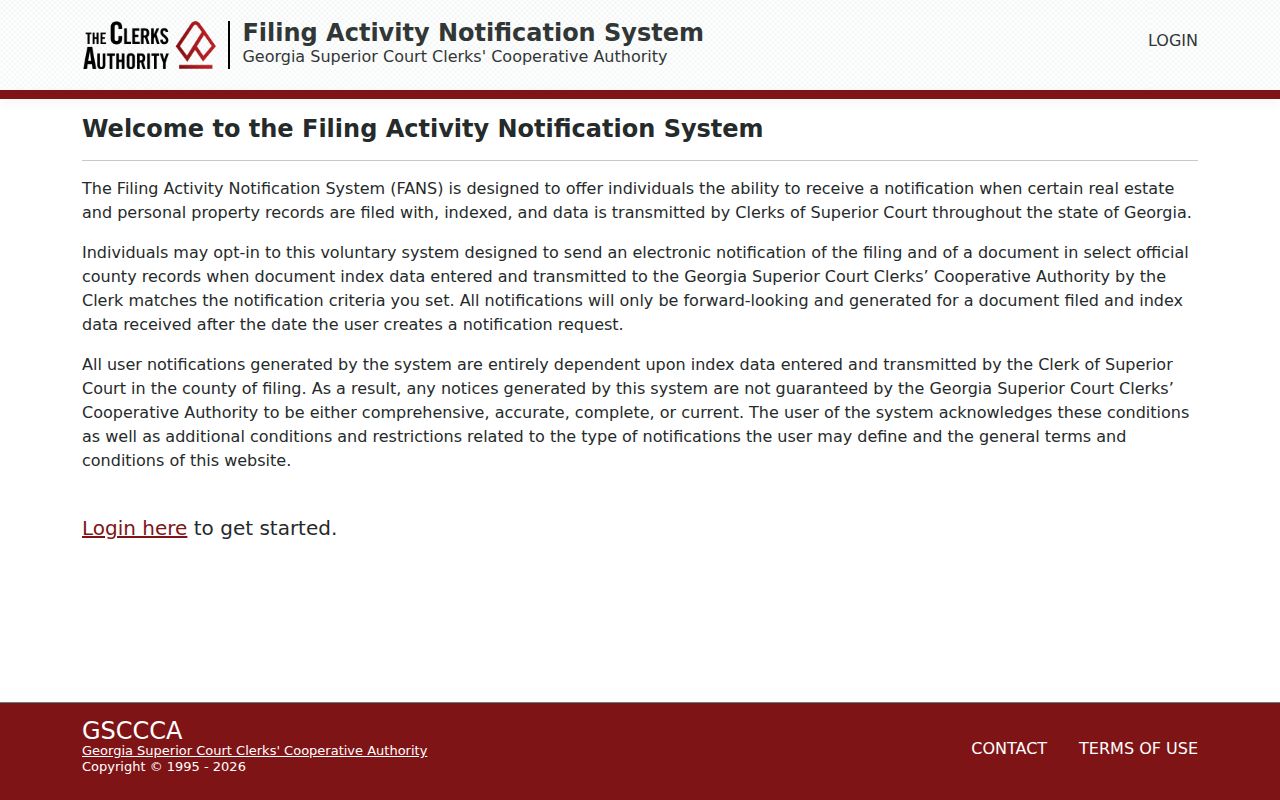
Treat an alert as a prompt to inspect the new filing with the Clerk. It never replaces reading the instrument.
Branch the Pulaski Chain at Estates and Sales
A tidy grantor-to-grantee line snaps when land moves through an estate, foreclosure, tax sale, sheriff's deed, merger, or boundary change. Search estate names, personal representatives, trusts, and entity variants. Then check probate and court records for the authority behind the transfer. Tax-sale and sheriff's deeds follow special processes. Pair them with the notice, lien or FIFA, court papers, and any later releases or redemption records. A security deed may hand the lender the grantee slot without any purchase occurring. Instrument type, not the party label, controls the meaning. For every branch, circle back to the same legal description. Acreage, land lot, district, subdivision, lot, road, river, and adjoining-owner language match parcels far better than a common surname ever will.
Search Pulaski Deeds by Book and Page
A citation comes from a tax card, a later deed, a plat, or a court order. It opens a faster door. Enter it in the GSCCCA book and page search. The county, book, and page fields are all required. The lookup skips names entirely. It sidesteps spelling variants. It takes you straight to a cited instrument.
Read the result with care. The county, the parties, the land description, and any cross-references should all agree with the citation you started from. Indexing habits vary by county. So keep leading letters and zeros exactly as a printed reference shows them. When a printed citation fails online, ask the Clerk. An index row with no viewable image is only a lead. Follow it with a counter request or a mail request.
Older citations behave differently. They may point to bound volumes or microfilm instead of a digital image. Write down the repository, volume label, page, and film number, along with the date you accessed it. That trail lets you retrace the deed later. A genuine gap in Pulaski County property records is one thing. A failed search is another. The trail tells them apart.
Compare Index Access with a Clerk Copy
Treat an online index row as a finding aid, nothing more. It can carry names, instrument type, recording date, and book and page. It can also carry location clues and image access. A plain image suits ordinary research. A certified copy comes only through an authorized record source when certification is required.
Searching and recording are separate transactions with separate costs. The GSCCCA fee guide lists $25 to record many deed, lien, and release instruments. It also lists $10 per page for plats, maps, and floor plans. Electronic filers also pay published payment charges and clear identity checks. None of that is the Clerk's copy fee, so never quote it as one.
Ask before ordering. Is the citation complete? How many pages does the instrument run? Do you need certification, and which payment forms are accepted? Will mail return cost extra? A few questions up front keep you from paying for a similarly named party's filing.
Account for Pulaski's Older Geography
Early Pulaski County deed records rarely speak in street numbers. A historic description may cite river landings, roads, adjoining owners, or whole land districts. The Ocmulgee River shipping era explains some of that vocabulary, and Hawkinsville's days as a road hub explain more. Local history is a search clue only.
Match an old description across the deed book, the plat, the tax digest, and later instruments. Pulaski County was created in 1808 from Laurens County. Later boundary shifts can push an early record into a parent or neighboring county collection, so note jurisdiction and date at every step. That habit saves hours.
Two archives help with the paper trail. Georgia Archives offers a Pulaski tax-digest citation model, and FamilySearch holds courthouse microfilm leads such as administrator bonds from 1828 to 1946. Probate context can explain an estate transfer. It still cannot replace the recorded land instrument itself.
Request a Pulaski County Deed Copy
Begin with a book/page or instrument citation. For a plain or certified copy, contact the Clerk of Superior Court, 350 Commerce Street, Hawkinsville, at 478-783-1911. Confirm counter, mail, certification, and payment terms before you order.
GSCCCA lists a monthly account price. It also offers free image viewing and per-page printing. Recording charges differ from copy costs. Verify every price before purchase.
Recorded, not guaranteed. Pulaski County deed records show filed instruments, but an index hit is not a title opinion and cannot reveal every unrecorded interest.